How do you practice RC STOL takeoffs and landings?
STOL is slow flight done on purpose, close to the ground. Practice it in three steps: slow flight with full flaps at height until you know where the stall is, then short takeoffs into the wind with takeoff flaps, then powered approaches to a spot, chopping the throttle just before touchdown. Measure each landing against a fixed mark so you can see yourself improve.
Fly Before is the RC flight simulator for Mac that runs real ArduPilot in one click. Plug in your radio and practice every step on your Mac before you go to the field. See what Fly Before does
Short takeoff and landing flying, from club contests to backyard bush planes, is a corner of RC with its own planes and its own technique. The flying looks slow and easy. It is slow; it is not easy. You are flying a few miles per hour above the stall, a few feet off the ground, with flaps changing the trim. That combination is expensive to learn on a real plane and cheap to learn on a simulator.
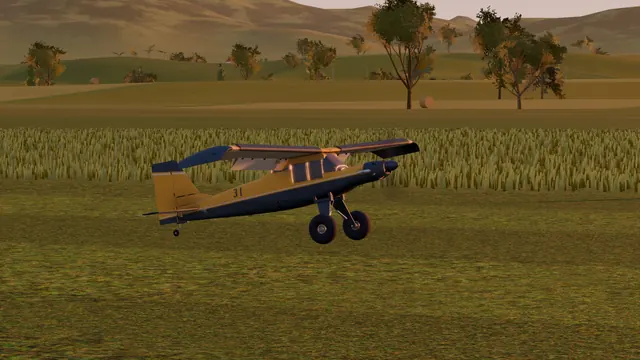
The planes
Fly Before has two high-wing tail-draggers for this. The Bush trainer is strut-braced, slow and takes off short. The STOL Bush goes further: fixed leading-edge slats along the wing, large flaps and a three-blade propeller. Put the flaps on a radio switch with the controller wizard, which learns every position, and the flap setting shows on screen as you fly. Every aircraft's wingspan, weight and stall speed is listed in the Hangar.
The STOL drill
- Slow flight at height. Full flaps, power to hold height, slow down until the stall warning signs appear: mushy controls, a sinking nose. Recover with nose down and power. Do this until you know the speed.
- Note the trim change. Lower the flaps at height and watch how the nose moves. Expect the same on every approach.
- Short takeoff. Into the wind, takeoff flaps, full power before the roll, tail up early, lift off at flying speed, then a shallow climb while the speed builds.
- Powered approach to a spot. Full flaps, nose a little high, power setting the descent. Aim a little before your mark.
- Chop and settle. Throttle closed a moment before touchdown, a small flare, then hold the stick back to keep the tail down while it rolls out.
- Score it. How far from the mark did the wheels touch, and how far did it roll? Fly ten and beat the average.
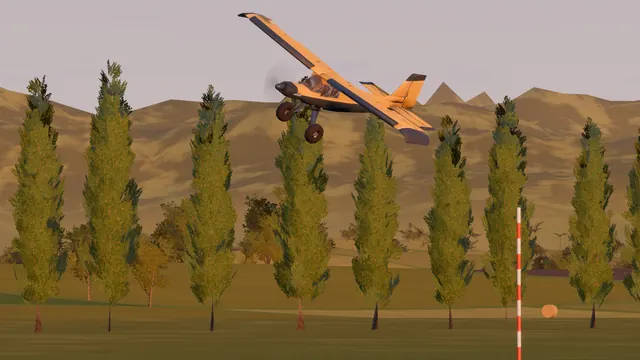
Fields to practice on
- Grass Club Field for the first sessions, with its grass strip to aim at.
- Hay Bale Stubble Field, a flat open field where you can land almost anywhere, for spot landings in any wind direction.
- A crosswind. Set the wind across your line once calm-air spot landings are consistent. Slow planes drift a lot.
Limits: our bush planes are generic airframes, not models of a kit you can buy, and the flight model is built from components, so the exact stall speed and flap behaviour of your plane will differ. Fly Before has no STOL contest scoring; use a mark on the field and count. Learn the sequence here and fine-tune it on your own plane at height first.
Questions
How do you make an RC plane take off shorter?
Point it into the wind, set takeoff flaps, hold the brakes or the plane until the motor is at full power, then let it roll with a little forward stick so the tail comes up early and the plane lifts off as soon as it has flying speed. Climb at a shallow angle until the speed builds; do not hang it on the propeller near the ground.
Why use power on a STOL landing?
Power lets you fly slower and steeper with control: the slipstream keeps air over the tail and the flaps, and you can stretch or steepen the approach with the throttle. Chop it at the last moment and the plane stops flying almost where you want it.
Do flaps make an RC plane harder to fly?
They change the trim: most planes pitch up or down when the flaps go down, and the stall comes at a lower speed but can be sharper. Practice deploying them at height first, note the pitch change, and land with the same setting every time until it is routine.
Fly Before: RC Flight Simulator is a native macOS app (Apple Silicon) for flying RC planes and fixed-wing VTOLs that runs real ArduPilot in one click through the free ArduPilot Helper. One-time purchase, not on sale yet.
Sources
- Aircraft and field descriptions: the Fly Before Hangar and field screens (in-app text, November 2026)
- Short-field technique: FAA, Airplane Flying Handbook, chapter on takeoffs and landings
Changelog
- : First published.